Puppertino
Creator & Maintainer
Bridging the Gap. The First CSS Framework for macOS-Inspired Apps
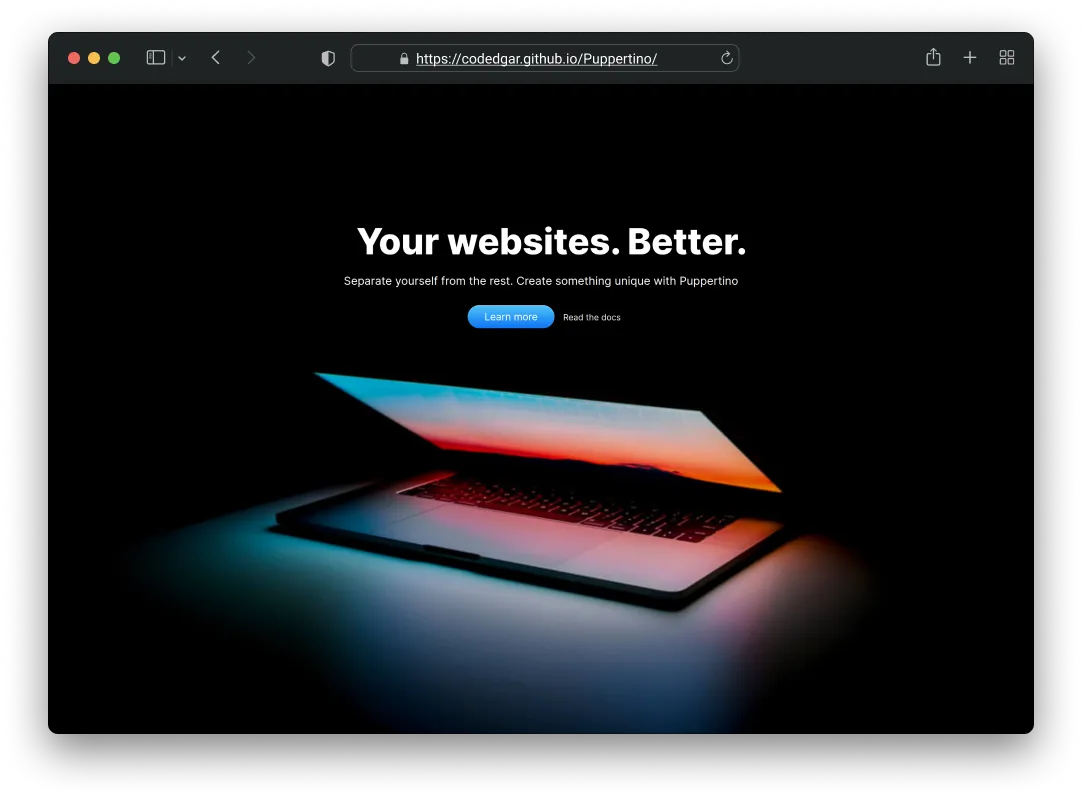
The Problem
When I started Puppertino, there was no CSS framework that captured the elegance of Apple’s Human Interface Guidelines for web applications. Bootstrap and Tailwind existed, but they had their own visual language. Developers wanting macOS-style interfaces had to build everything from scratch.
Key Decisions
Decision 1: CSS Variables as the Foundation
The situation: Dark mode was becoming standard. Sass variables would require JavaScript for theme switching.
Options considered:
- Sass variables with a JS theme switcher
- CSS-in-JS (would limit the audience)
- CSS custom properties (native, no JS required)
What I chose: CSS custom properties as the architectural foundation. Every color, spacing, and sizing value is a variable.
Tradeoff accepted: Older browser support dropped. But the audience for a macOS-style framework was unlikely to be on IE11.
Decision 2: Opinionated Over Flexible
The situation: Most frameworks are flexible, letting developers customize everything. But that means more decisions for users and inconsistent results.
What I chose: Strong opinions. The spacing scale is fixed. The color palette is curated. Components look like macOS by default.
Tradeoff accepted: Developers who want complete customization will not choose Puppertino. But developers who want macOS styling get it out of the box.
Decision 3: Documentation as a First-Class Citizen
The situation: Many CSS frameworks have great code but poor docs. Users spend time reading source code instead of building.
What I chose: Write documentation before code. Every component has live examples, copy-paste snippets, and customization notes.
Tradeoff accepted: Slower initial development. But adoption and community satisfaction increased significantly.
Community Impact
- 5,000+ downloads across npm and direct downloads
- 1,000+ GitHub stars from developers worldwide
- Featured in design and development communities
- Used in production applications across various industries
What This Proves
- Constraints enable creativity: The opinionated approach attracted users who wanted macOS styling, not flexibility.
- Documentation is product: The docs site is as important as the framework itself.
- Open source teaches you to ship: Balancing feature requests, bug fixes, and vision is hard. Saying no is a skill.
- Community feedback shapes direction: The most requested features became priorities. The niche features stayed niche.
Have a similar project in mind?
Let's discuss how I can help bring your vision to life.
Book a Discovery Call